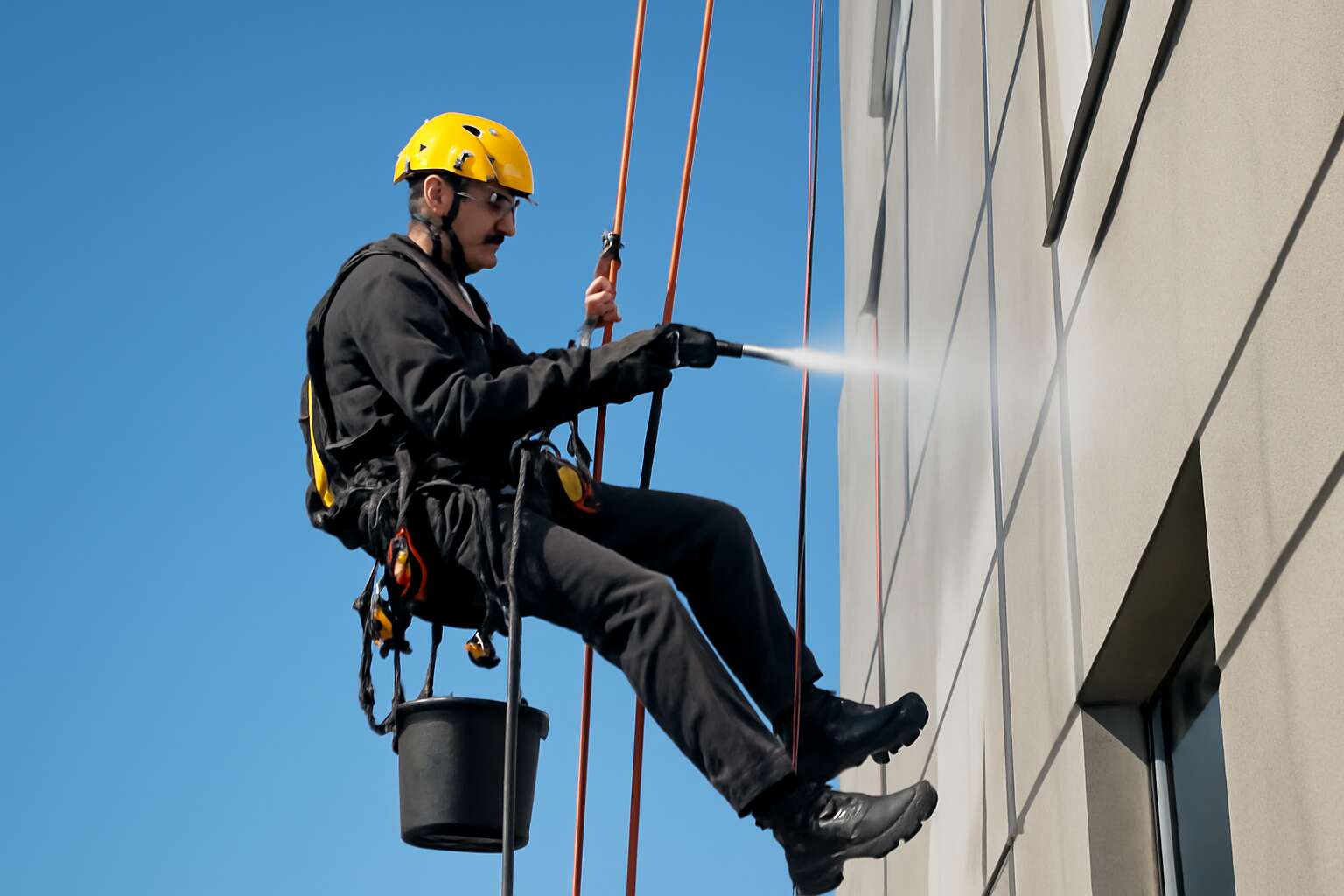
Rope Access Cleaning Essentials
Understanding the scope of rope access cleaning
Rope access cleaning cuts downtime on facade maintenance by up to 40%, a figure heard from Cape Town to rural towns! The craft rests on careful planning, quiet precision, and deep respect for every surface touched. Abseil cleaning is more than a method—it’s a choreography of reach and restraint.
Understanding the scope of rope access cleaning means looking beyond ladders into walls, signage, towers, and solar arrays. In South Africa’s varied climates, the approach shifts with sun, wind, and heritage surfaces—from glass to stone. This method captures a portable, low-impact practice that keeps façades polished without disruption.
Safe operation, weather, and timing shape each clean, turning projects into careful negotiations between gravity and surface. In coastal towns, salt and wind demand a gentler touch; inland, heat and dust test the surface’s patience. The technique honours both the building’s story and the people who maintain it.
Substrate considerations and surface types
Surface personalities differ more than guests at a braai; some gleam with polish, others balk at the slightest touch. In SA’s climate, abseil cleaning hinges on substrate intelligence—knowing what a wall wants before I lean on it. Even a small adjustment in compatibility can save expensive refinishing later. It’s not brute force; it’s listening to the surface’s story.
Rope Access Cleaning Essentials requires reading the substrate like a map: density, porosity, coatings, and heritage finishes. Consider:
- Surface hardness and porosity
- Coating compatibility and chemical reactivity
- Heritage materials needing delicate handling
In South Africa, façades range from sun-warmed stone to sleek glass, and the substrate dictates pacing and daylight-friendly choices. This approach respects substrate limits and keeps the building’s story intact.
Project planning and risk assessment
In South Africa’s rapid-beam urban façades, one well-made plan beats brute force every time! Preparation is prevention—so I start with scope validation and a calm map of risks before any rope sighs through the carabiner. For abseil cleaning, project planning isn’t paperwork; it’s a pact with the surface, the wind, and the client.
From there, I lay out a live risk register and a rescue protocol.
- Clarify the scope, access methods, and allowable disruption
- Assess site conditions: height, surface, weather, and escape routes
- Plan communications, roles, and emergency response, with rehearsals
In SA, these steps keep the building’s story intact while respecting its temperament.
Cleaning methods and best practices in rope access
In South Africa’s wind-kissed towers, a clean line is durability in disguise. Speed without care invites rework; clients report up to 40% more on hurried façades. abseil cleaning embodies a discipline, a dialogue between surface and sky.
Rope access cleaning essentials hinge on a gentle touch and curiosity. The methods I favour honor the surface, not the drama above it:
- Soft-bristle brushes and microfiber for gentle release
- Low-pressure rinsing and controlled water
We choreograph wind, light, and geometry—never rushing the moment, keeping runoff discreet and conversations clear with clients and crews alike.
Techniques for Efficient Cleaning in Elevated Environments
Abseil techniques and positioning basics
Glinting in the sun, height becomes a canvas and abseil cleaning a quiet craft. A veteran rope operator once whispered, “Balance is the oldest tool we carry,” and that line echoes along every facade we renew across South Africa.
Techniques for efficient cleaning hinge on positioning basics and subtle rope choreography. The body acts as a counterweight, the eyes map the wall, and hands guide the brush with graceful economy. To illuminate the flow, consider:
- Line control and rope choreography
- Body alignment for varying angles
- Surface-aware brushing to protect substrates
In abseil cleaning, patience and poise outshine haste. This is the essence of abseil cleaning: a rhythm that respects wind, wall, and water to reveal a renewed surface, shimmering with care across South Africa’s iconic structures.
Access routes, anchor systems, and redundancy
Across South Africa’s skylines, a telling stat lingers: projects that prioritize access planning reduce downtime by nearly a third. In the hush between gusts and grit, abseil cleaning becomes a quiet art—rhythm over haste that reveals stone and paint with renewed glow.
Access routes are the first brushstroke on height. They must cradle the façade rather than bruise it, offering safe passages for gear and gaze alike. Consider these elements:
- Clear ingress and egress
- Non-marking paths and edge protection
- Coordinated route planning with supervision
Anchor systems and redundancy form the safety spine of every ascent. Certified anchors and a back-up line that remains ready beside the primary path are quiet guarantees that allow abseil cleaning to endure winds and time.
Surface preparation and cleaning sequence
In South Africa’s cityscapes, downtime on high-rise projects melts into a quiet, deliberate dance. abseil cleaning, when aligned with surface prep and a measured cleaning sequence, reveals facades with renewed clarity. The approach begins with a calm assessment of wind, stone, and coatings—then proceeds with a gentle pre-wet that steadies dust and a motion that honours the building’s skin.
Surface preparation should respect the substrate’s temperament and the environment. The cleaning sequence unfolds as a steady, non-rushed cadence:
- Material compatibility and protective profiles
- Run-off containment and wind-driven debris management
- Tooling synergy with substrate texture and coating finish
In the hush between gusts, precision and patience sustain longevity and luster.
Cleaning agents, tools, and eco friendly options
In South Africa’s air-swept high-rises, grime hides in corners where wind can’t quite shake it. A robust abseil cleaning rhythm can reclaim surface clarity, and managers report brighter facades after a season of careful attention.
This abseil cleaning approach relies on careful selection of cleaning agents, tools, and eco-friendly options. The aim is to respect the substrate and community, using low-damage brushes and mild surfactants that compliment the coating finish.
- Cleaning agents
- Tools
- Eco-friendly options
With patience and discipline, the results endure; the city’s textures reveal themselves—stone, glass, and metal gleam with quiet confidence.
Drying, inspection, and quality control
Elevated spaces demand patience. In South Africa’s wind-worn high-rises, abseil cleaning isn’t just scrubbing—it’s choreography. Drying, inspection, and quality control fuse into a reliable rhythm that reveals stone and glass in honest light, a quiet victory for managers and passersby alike.
Key techniques keep the pace efficient and the surface kind.
- Controlled air flow and drying time to prevent streaks
- Systematic post-clean inspection for hidden corners
- Documentation of results to track quality over seasons
Results endure when patience guides every touch, and the community sees surfaces that glow with quiet confidence. A well-timed cycle honours the substrate and the people who share the skyline.
Safety, Compliance, and Risk Management
Personal protective equipment and training requirements
Safety is the quiet constant behind every abseil cleaning job! In South Africa, risk management rests on OHSA compliance and international rope-access standards like IRATA, ensuring each descent is planned with care and accountability.
- Helmet with face shield
- Full-body harness with lanyard
- Protective gloves and eye protection
- Fall-arrest devices and rope sleeves
- High-visibility clothing and sturdy boots
Training requirements formalize competence, from induction to refreshers, with records traveling site to site. I’ve seen how focused instruction—hazard recognition, PPE handling, and emergency procedures—shapes safe abseil cleaning.
Rope systems inspection and fall protection
In South Africa, sites embracing rigorous rope-access safety see double-digit reductions in near-misses during abseil cleaning. Safety is the quiet constant behind every descent, with rope systems inspection guarding against failure and fall protection guarding lives.
- Visual and tactile checks of anchors, slings, and ligatures
- Rope integrity and pulley wear
- Compatibility of devices and harness fittings
Compliance is not paperwork alone but a living standard—regular audits, certified training records, and site-specific risk registers shape every operation, including abseil cleaning. Clear line-of-command and emergency communications ensure swift, controlled responses should a fault arise.
Risk management anchors the plan in environmental conditions, access routes, and client expectations. Our approach to this work treats every descent as a careful collaboration with gravity, balancing efficiency with accountability and safeguarding outcomes for the South African environment and workforce.
Working at height regulations and standards
Safety is the quiet constant behind every descent. In South Africa, working at height regulations demand fall protection and disciplined training. abseil cleaning relies on a safety-first mindset that treats each operation as controlled, deliberate work rather than a hurried drop. Precision and care save lives and protect property.
Compliance isn’t mere paperwork; it aligns with the country’s regulatory framework and industry standards governing rope access. We uphold the letter and spirit of OHSA and the Construction Regulations, ensuring equipment compatibility, qualified personnel, and site-specific procedures without turning safety into red tape.
Risk management shapes every plan—from weather and access routes to client expectations. Each job is a careful negotiation with gravity, balancing efficiency with accountability. This approach safeguards South Africa’s environment and workforce while preserving long-term client trust.
- Site supervisor
- Safety officer
- Rope-access technician
Emergency procedures and incident reporting
On South African sites, a practiced emergency drill can slash response times and save lives during abseil cleaning. Safety isn’t a box to tick—it’s the silent backbone of every descent!
Emergency procedures and incident reporting are built into every plan. In an emergency, we follow a concise protocol:
- Sound the alarm and summon medical help if needed
- Isolate the area and secure rope access equipment
- Assign a safety officer to manage the scene
- Record the incident and notify the client, then brief the team
Post-incident reporting stays factual and forensic in abseil cleaning, guiding improvements, training, and accountability. It captures time, location, equipment, and witnesses, aligning with OHSA and Construction Regulations.
Risk management remains the compass: weather windows, access routes, and client expectations—each decision weighed against safety, property protection, and resilience.
Site-specific safety planning and permit-to-work
In South Africa, site-specific safety planning turns risk into resilience during abseil cleaning. A safety culture doesn’t wait for an incident to teach its lessons; it shapes every descent with purpose and oversight. A hinge is the permit-to-work, which gates high-risk tasks through formal sign-off and ongoing monitoring. “Safety is a compass,” a veteran safety officer reminds us.
Our approach to safety, compliance, and risk management starts with tailoring every plan to the site’s realities. Permit-to-work ensures access routes, isolation of services, and rescue provisions are documented before a line is touched. The process clarifies responsibilities and provides a clear trail for accountability.
- Permit-to-work authorization and sign-off
- Site briefing and task sequencing
- Isolation of hazardous services
- Rescue readiness
With this framework, the job proceeds through disciplined collaboration between client expectations and practical protection, maintaining flow without compromising safety.
Equipment and Tools for Rope-Based Cleaning
Ropes, harnesses, and anchor hardware essentials
On South African sites, gear reliability can shave hours off a cleanup schedule—downtime drops by as much as 25% when the toolkit is trusted. For abseil cleaning, the right setup is less about bravado and more about harmony: ropes, anchors, and the harnesses that connect them must speak the same language. A well‑matched kit reduces snags, misloads, and shimmying during descent, turning potential chaos into calm, controlled movements at height!
- Ropes designed for rope access (static or low‑stretch variants as required)
- A properly fitted full‑body harness with leg loops and back support
- Locking carabiners and corrosion‑resistant anchor slings
- Rope protectors, prusiks, and essential rope management accessories
- Descenders or transfer devices and a compact rope bag
Inspect gear before every session, ensuring compatibility with cleaning methods and local standards for abseil cleaning. A quick check of wear, load rating, and overall condition keeps operations safe and efficient, protecting both personnel and substrate from unintended consequences.
Cleaning tools and applicators
On busy South African sites, a reliable toolkit can cut downtime by up to 25%. Cleanliness at height demands gear that talks the same language as the rope and anchors—consistent, forgiving, fail-safe. Rhythm matters more than bravado!
Equip robust rope-based cleaning work: static or low-stretch ropes suited to your method, a properly fitted full-body harness, locking carabiners, and corrosion‑resistant anchor slings. For abseil cleaning, the right toolkit keeps lines calm and moves predictable, easing sway and snag potential. Include rope protectors, prusiks, and essential rope management accessories to streamline passes down the line.
- Rope protectors
- Prusiks and rope-management accessories
- Descenders or transfer devices
- Compact rope bag
These tools are built for fast, controlled work at height.
Keep gear compatible with cleaning methods and local standards. A well-balanced setup minimizes snags, misloads, and shimmying during descent while maintaining substrate integrity.
Cleaning solutions and chemical considerations
Equipment and tools for rope-based cleaning must behave like a well-tuned crowd — calm, predictable, and a shade unforgiving of slop. abseil cleaning relies on static or low-stretch ropes matched to your method, a properly fitted full-body harness, locking carabiners, and corrosion‑resistant anchor slings. Add rope protectors, prusiks, and rope-management accessories to keep passes smooth and snag-free.
Cleaning solutions and chemical considerations matter as much as hardware. Choose eco-friendly detergents compatible with the substrate and rope materials, and avoid solvents that can weaken lines or corrode fittings. Rinse and waste handling should be considered, especially on sensitive façades or heritage work common in South Africa, abseil cleaning here. A small, dedicated rope bag for liquids, labeled and sealed, keeps spills contained and morale high.
- Eco-friendly detergents
- Substrate and rope compatibility
- Rinse and waste management
Ladders, platforms, and temporary access devices
Access gear is the quiet power behind abseil cleaning. Ladders, platforms, and temporary devices must behave like a well-mannered crowd—calm, predictable, and ruthless about slop. For rope-based cleaning, choose ladders that pair with your rope system, platforms that stay level in a gust, and anchors that resist SA heat and humidity. A properly fitted full-body harness, locking carabiners, and corrosion-resistant slings ground the effort; rope protectors and prusiks keep routes smooth and snag-free as daylight fades.
- Rope-friendly ladders with stable feet and sensible rung spacing
- Portable platforms or daisies designed for quick rigging
- Temporary access devices such as beam clamps and adjustable anchors
With tidy rope management and a rehearsed choreography of hardware, abseil cleaning becomes a confident, courteous overture to any façade.
Maintenance and decontamination of equipment
“Quality is not an act, it is a habit,” and in abseil cleaning that habit shows in the gear you trust. From my experience in South Africa’s wind and sun, a disciplined toolkit matters as much as technique: rope-ready hardware, corrosion-resistant metals, and components designed to endure heat and humidity. A properly fitted full-body harness, locking carabiners, and rugged slings ground the effort; tidy line management prevents snags as daylight fades.
Equip a compact kit that travels with the rigging line:
- abrasion shields and rope sleeves
- microfiber applicators, scrapers, and soft brushes
- non-corrosive carabiners and lightweight slings
- portable spray bottles with neutral cleaners
- compact drying mats or a small drying rack
With these tools, abseil cleaning becomes precise and dependable—an art form that respects both the façade and the team behind it.
Industries, Applications, and Case Studies
Building facades and window cleaning with rope access
Cities in South Africa reveal a simple truth: a pristine façade is a powerful signal to tenants and visitors alike. In a climate where salt, dust, and wind test every ledge, a focused abseil cleaning campaign can refresh more than glass—it refreshes perception and value. The work blends precision with restraint, turning gravity into a deliberate, careful art.
Industries and applications span commercial towers, hotels, and urban mixed-use developments that demand exterior maintenance without disruptive scaffolds.
- Building facades and window cleaning with rope access on high-rise structures
- Architectural features, balconies, and curtain-wall systems
- Signage corridors and light wells where access is restricted
Case studies from Cape Town and Johannesburg illustrate ROI: faster turnaround, reduced ground disturbance, and cleaner skylines.
Bridge, tower, and offshore structure maintenance
Ropes replace scaffolds across South Africa’s wind-swept cities, and the impact is palpable. In contemporary maintenance campaigns, abseil cleaning trims downtime and restores surface sheen with quiet precision. Gravity is transformed into a careful craft, lifting bridges, towers, and offshore structures from dull to deliberate!
- Bridge and viaduct maintenance
- Tower exteriors, curtain-wall systems, and signage
- Offshore platforms and maritime structures
From the field, industries and applications converge on these three arenas—bridges, towers, and offshore structures—where access is planned, risks weighed, and deadlines met. Cape Town and Johannesburg case studies illustrate ROI: faster turnaround, reduced ground disturbance, cleaner skylines. I’ve watched teams choreograph access with grace, weaving safety and efficiency into every tie-off and descent.
Industrial plants and confined spaces cleaning
Industries embracing rope access rely on abseil cleaning to protect assets and people. In South Africa, industrial plants and confined spaces benefit from disciplined, downtime-friendly maintenance that restores surfaces without the disruption of heavy scaffolds.
Applications span chimneys, storage tanks, turbine housings, ductwork, and curtain-wall systems on high-rise facilities and maritime yards. For these tasks, teams deploy precise positioning, contamination control, and eco-friendly agents.
- Tank exteriors and vessels
- Chimneys, stacks, and pipe racks
- Turbine and compressor housings
Case studies across coastal and industrial corridors show our teams delivering faster turnarounds, reduced ground disturbance, and surfaces that stay gleaming longer, often with lower operating costs and safer working conditions for ground teams.
Case studies: outcomes and lessons learned
Downtime-friendly care is a haunting luxury—yet rope access makes it possible. The technique abseil cleaning has shaved up to 50% from downtime, safeguarding assets and people as dawn breaks over tall facades and industrial shells.
In South Africa, industries spanning coastal yards and inland plants rely on controlled access structures. The technique delivers surface renewal with minimal disruption, paired with eco-friendly agents and careful positioning.
Case studies reveal outcomes and lessons learned from the field. Across coastal yards and inland plants, results speak for themselves.
- Faster turnarounds with reduced ground disturbance and safer ground crews.
- Longer-lasting finishes and lower ongoing maintenance costs.
- Lessons learned: thorough pre-job walkthroughs and robust contamination controls drive consistency.
Challenges and solutions in complex terrains
In South Africa’s varied industrial theatre, abseil cleaning is the quiet engine behind swift surface renewal. Across harbor yards and inland plants, teams descend with purpose, restoring façades while downtime falls by as much as 50%. Its cadence, measured and precise, keeps people safe and finishes lasting longer.
In complex terrains, challenges give way to clever solutions. Three salient dynamics shape outcomes:
- Wind and sway challenge anchor reliability and require robust redundancy
- Constrained access in urban canyons demands precise planning and route awareness
- Surface contamination and rough substrates call for tailored cleaning approaches
Case studies reveal outcomes and lessons learned from the field; abseil cleaning reduces downtime, preserves assets, and supports safer, more predictable operations.

0 Comments