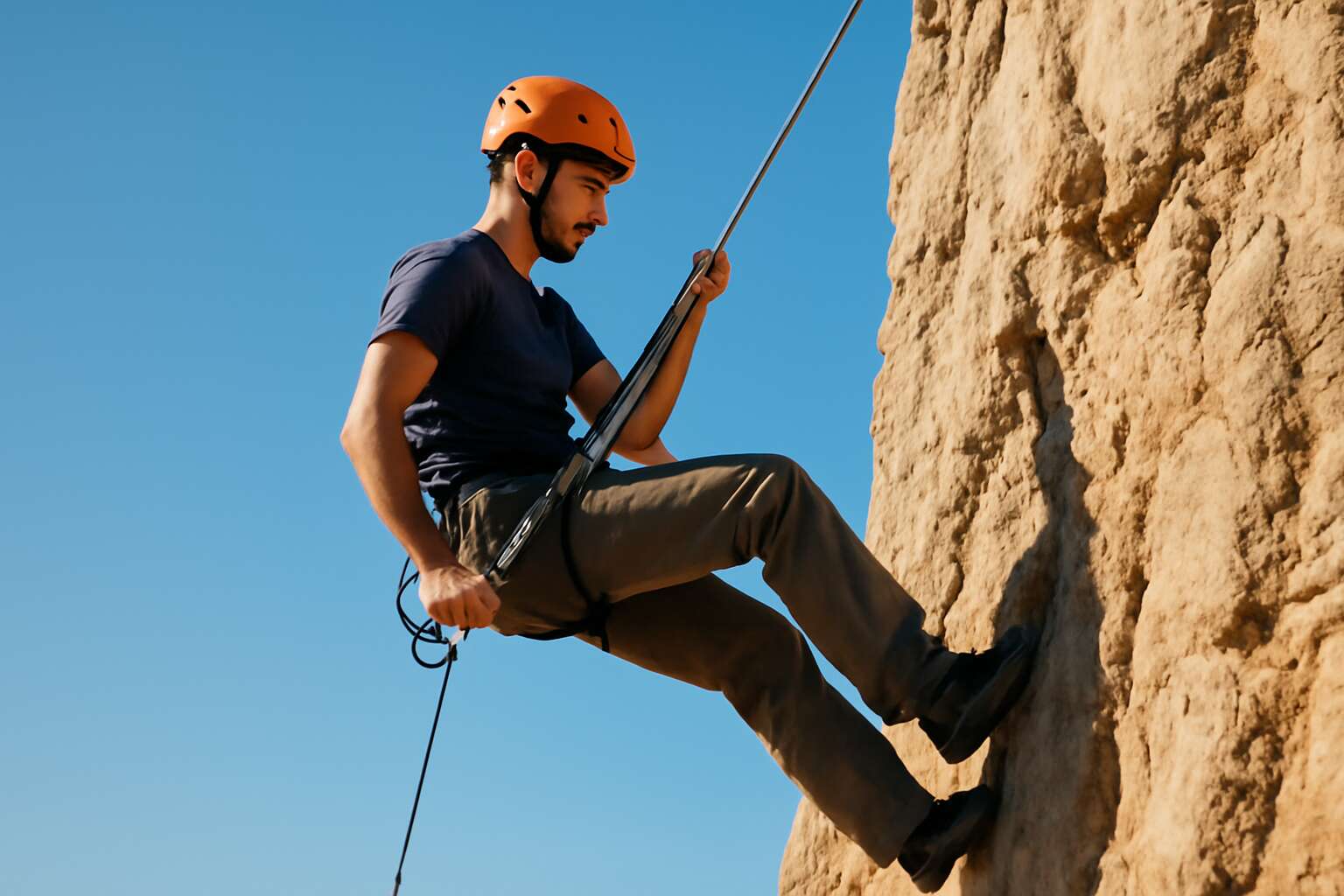
Understanding the basics of abseiling
What is abseiling and how it differs from rappelling
Across South Africa’s rugged crags, abseiling captivates and confounds in equal measure—it’s gravity meeting rope in a quiet, purposeful dance. If one asks how does abseiling work, the answer rests on three partners: rope, friction, and a controlled descent device that converts weight into smooth, predictable movement.
The principle is elegant: a solid anchor holds the line while the rope runs through a friction device, damping speed so a descent becomes a measured negotiation with the vertical. The result is a movement that feels almost conversational, as if gravity were politely offering a hand rather than grabbing at the ankles.
- rope
- harness
- descender or belay device
- anchor system
In South Africa, these elements translate to practical, city-to-coast scenarios where the rock remains a patient host and the climber learns to move with quiet confidence rather than bravado.
Equipment overview including harness, rope, and descender
“Gravity is a partner, not a problem,” a guide once whispered, and on South Africa’s rugged crags that sentiment sticks. Understanding how abseiling works starts with a quiet respect for the kit: three core companions—rope, friction, and a controlled descent device that turns weight into smooth, deliberate motion.
Equipment at a glance includes:
- Harness
- Rope
- Descender (controlled descent device)
So, how does abseiling work? The harness sits snug, the rope runs through the descender, and friction within the device tempers speed, turning descent into a measured dialogue between you and gravity. It’s a disciplined balance that South Africa’s coastlines have learned to respect.
Principles of descent control: friction, braking, and speed management
So, how does abseiling work? It is a dialogue between weight and restraint, a choreography where gravity is a patient partner. The moment you commit to descent, the stage is set by three intertwined forces—friction, braking, and a controlled descent that turns momentum into deliberate motion.
Here is the trio that keeps the rhythm without rushing the edge:
- Friction: energy is melted by the rope passing through the descender and contact points
- Braking: deliberate resistance applied by the device or hands to slow descent
- Speed management: maintaining a steady, controlled pace that respects the cliff face
From wind-swept shores to the shadowed gorges of the Drakensberg, the craft feels like myth made practical—a discipline where body, rope, and device tell a patient, unified story of trust and gravity.
Common myths and misconceptions about abseiling
Gravity is a patient partner on South Africa’s cliffs—turning fear into measured calm. Understanding the basics of abseiling means seeing rope, gravity, and body as a simple trio. On South Africa’s crags, this is as much about balance and timing as it is about gear.
So, how does abseiling work? The answer is a careful conversation between gravity and restraint, where rope passes through a controlled device and the body moderates speed.
Common myths persist. Here are a few you’re likely to hear:
- It’s only for adrenaline junkies
- It’s inherently dangerous and requires heroic bravery
- You must descend with a partner or expert at all times
With the basics in view, abseiling remains accessible to curious climbers, hikers, and adventurers across South Africa’s varied landscapes.
Prerequisites for beginners and pre-descent safety checks
On South Africa’s cliffs, gravity is a patient partner—until you learn to listen. So, how does abseiling work? It begins with a simple trio: rope, gravity, and body, guided by a controlled device that modulates speed and keeps risk tempered. The result is calm where fear once reigned, a rhythm that turns descent into dialogue with the rock.
Beginners arrive with questions and guarded curiosity. Here are the prerequisites to step into the harness with confidence:
- Reasonable fitness and mobility
- Basic comfort with rope concepts and belay terms
- Clear, responsive communication with a partner or guide
- Willingness to train under a qualified instructor
Pre-descent safety checks frame the climb’s first breaths: equipment inspection, harness fit, secure attachments, consistent communication, and a quick weather and terrain appraisal. In South Africa’s varied landscapes, these checks tether plans to reality and keep the descent measured and safe.
Techniques and equipment used in abseiling
Rope systems and belay basics
Gravity writes the opening line in every abseil; in South Africa’s cliffs and canyons, how does abseiling work becomes a study in balance, breath, and line. Friction and pace translate fear into precision, while anchor security keeps the descent deliberate. “Control is the difference between awe and accident,” a veteran guide reminds us, and that truth lands with every safe drop.
Techniques and equipment hinge on rope systems and belay basics without jargon. The backbone: anchor redundancy, rope choice, and a disciplined braking method. Consider these elements:
- Redundant anchors from solid features
- Appropriate rope selection for terrain
- Reliable braking device and backup control
The flow remains calm, precise, and respectful of gravity.
This is the moment to consider how does abseiling work—clarified by practice, lines, and breath. In South Africa, respect for terrain and sound technique remains the compass.
Descenders and braking techniques
On South Africa’s cliff faces, descent is a dialogue with gravity—the moment breath slows and line answers with quiet arithmetic. A five‑second lapse can tilt the balance from awe to caution, reminding us that control is the heartbeat of every safe drop.
Descenders translate rope movement into measured friction; a reliable braking device sits in hand, guiding the descent with calm, deliberate pressure. Shoulder and hip positioning, smooth core engagement, and a steady cadence keep momentum from turning into panic.
Consider this: how does abseiling work—it’s the subtle choreography of rope, device, and breath. Friction governs speed, while backup control secures the line, letting gravity become a partner rather than a foe.
Harness fit, knots, and positioning for stability
On a sunlit South African crag, breath becomes a tempo and gravity writes the first line of dialogue. A guide whispers, “The harness is a promise, not a leash.” I adjust the waist belt, feel the snug leg loops, and test the chest strap—calm threads through fear. Knots anchor me to the rope; my stance—hips over the rope, core engaged—keeps balance as the world tilts below.
In practice, technique is a series of small, decisive moves:
- Harness fit: double-back buckles, even tension
- Knot selection: figure-eight on a bight with follow-through
- Positioning: hips over rope, shoulders square, feet light
Equipment forms the quiet chorus: helmet, a reliable descent device, locking carabiners, and rope chosen for balance. The anchor and backup knot are checked, then the descent resumes. It starts here (how does abseiling work?) with fit, knots, and positioning in harmony with rope and breath.
Rope care, storage, and inspection routines
More than half of abseiling mishaps are preventable with inspection. Techniques and equipment form the backbone of a descent in SA. When you respect rope care and inspection routines, you see how does abseiling work reveal itself as choreography, not a gamble. Climbers treat rope as a partner—friction and feedback harmonize with the descent device. You’ll scrub gear, test the device, and stay calm and precise.
- Inspect for cuts or fuzzy strands after every session.
- Wash the rope with mild soap and water if it’s dirty; never use harsh cleaners.
- Dry completely away from direct heat, store loosely coiled in a breathable bag.
Storage and inspection routines keep your equipment honest. Keep ropes out of sun, away from chemical vapors, and coiled loosely when not in use. Retire rope after signs of core damage or after long service under heavy loading.
Anchor points, redundancy, and safety margins
Anchor points are the heroes of abseiling—without them, gravity would be loud and draconian. If you’re wondering how does abseiling work, the answer lives in redundancy and margins. It rests on robust anchors, clean load paths, and conservative safety margins that keep the descent steady.
Redundancy is the name of the game: two independent anchors, ideally equalized so a single falter doesn’t topple the system. The idea is simple in concept, complex in practice: distribute the force, keep gear aligned, and stay within the margin where failure becomes unlikely.
The equipment allied to anchor work includes sturdy slings, locking carabiners, and purpose-built anchors designed for the loading regimes of a descent. When these bits cooperate, the arc remains controlled.
- Two-point redundancy
- Independent load paths
- Back-up options for retreat
In South Africa’s crags, this balance between anchor discipline and gear reliability makes or breaks the experience—elegant motion rather than gamble.
Safety, risk management, and training
Risk assessment steps before a descent
When you ask how does abseiling work, safety and risk management are the quiet gears that keep awe from tipping into folly. In South Africa’s rugged playgrounds, the descent becomes a conversation with gravity, guided by thoughtful preparation and disciplined care.
Before a descent, a structured evaluation unfolds—not a checklist, but a ritual that preserves life and wonder in equal measure.
- Site and environment: terrain, weather, access.
- Personnel readiness: roles, communication, backup plans.
- Equipment condition: harnesses, anchors, systems checked.
- Emergency planning: rescue options and signals.
Such framing keeps the experience elegant, purposeful, and safely anchored in a culture of vigilance.
Personal protective equipment and weather considerations
‘Safety is not the absence of danger, but the presence of control,’ a guide once said, and it lands on South Africa’s cliffs with truth. how does abseiling work? It starts long before rope meets rock—with disciplined prep, clear communication, and a respect for weather that keeps awe safely tethered to reason.
Key anchors remain consistent:
- Personal protective equipment: helmet, harness, gloves, sturdy boots
- Weather awareness: forecast checks, wind shifts, sun glare
- Training and drills: refreshers, buddy checks, rescue readiness
With these measures in place, the practice becomes art—risk-managed, human, and deeply respectful of the landscape we call home.
Training pathways from beginner to advanced
‘Safety is not the absence of danger, but the presence of control’—a truth that lands on South Africa’s cliffs with a wink of chalk and a steady breath. It starts with clear planning, discipline, and calm communication long before rope leaves the belay. Risk management is baked into the process: site checks, weather pause, and proper gear aligns the descent with deliberate movement rather than impulse.
Training pathways from beginner to advanced keep the sport life-affirming rather than hair-raising. The journey typically looks like this:
- Beginner: fundamentals, safety checks, and basic descents.
- Intermediate: refined braking, rope management, and route selection.
- Advanced: rescue rehearsals, multi-pitch tactics, and anchor optimization.
With these elements in place, the question of how does abseiling work becomes a measured sequence—calm, controlled, and respectful of the landscape we call home.
Emergency procedures and rescue planning
So, how does abseiling work under pressure? It hinges on control, calm breath, and rehearsed rescue plans that keep the cliff’s shadow in check rather than the heart racing. Safety starts long before rope leaves the belay—site awareness, team roles, and a shared plan shape the descent into a measured ritual against the rock.
Emergency procedures and rescue planning are not afterthoughts; they are woven into every descent. When things shift, a practiced response keeps people safe and the experience trustworthy. A simple, clear framework becomes your lifeline:
- Defined communication channels and signals
- Roles for leader, rescuer, and support
- Access to rescue gear and self-rescue options
- Pre-arranged contingency routes and rendezvous points
In South Africa’s wild corridors, the best plans turn uncertainty into quiet confidence.
Common hazards and mitigation strategies
Safety, risk management, and training are the quiet gears behind every abseil. If you’re wondering how does abseiling work under pressure, the answer lies in control, calm breathing, and rehearsed rescue plans that keep fear from the foreground. ‘Control is the cliff’s quiet voice,’ a veteran guide reminds, as preparation starts long before rope drops: site awareness, clear roles, and a shared plan.
Common hazards become manageable through deliberate preparation. Here are key hazards and mitigations the team keeps in view:
- Slippery rock and damp surfaces — solid footing and observation.
- Loose rock and rockfall — helmet and edge distance.
- Equipment wear — routine checks and redundancy.
- Weather shifts — monitor forecasts, seek shelter.
- Fatigue and miscommunication — rest, clear signals.
In the South African landscape, those principles translate into a culture of training that makes tough descents feel controlled rather than reckless.
Practical tips, best practices, and troubleshooting
Gear preparation and quick-check routines
On a dawn-lit cliff above Table Mountain’s spine, a familiar refrain circles the crags: how does abseiling work? The answer hides in balance—between rope, breath, and the quiet bond with your partner and gear.
Practical tips emerge as habits, not rules. Cultivate a calm pre-descent routine: basic gear checks, a weather read, and clear team communication. Best practices favour redundancy and gentle testing of systems, with defaults that keep the descent measured and safe.
- Harness, helmet, and footwear condition
- Rope sheath wear and flexibility
- Anchor redundancy and orientation
Troubleshooting and quick-check routines keep nerves steady when the surface shivers or a sound doesn’t sit right.
Descent pacing, communication, and body positioning
In answering how does abseiling work, we see balance and trust at the core—rope, breath, and a trusted partner sharing the pace. Weight travels through the harness, the device modulates speed, and the cliff holds its patient agreement.
Practical tips emerge as habits, not rules: cultivate a calm pre-descent routine, maintain a steady pace, and keep communication lucid. Best practices favour redundancy and gentle testing of systems, with defaults that keep the descent measured and safe!
Troubleshooting and quick-check routines steady nerves when the surface shivers or a sound sits wrong. If a creak or vibration hints at trouble, pause, breathe, and recheck your stance and braking cues.
- Descent pacing that respects rope dynamics
- Clear, concise communication among teammates
- Body positioning for balance and control
Troubleshooting common issues like rope jams and equipment faults
In practice, how does abseiling work? It’s rope physics in motion: your weight anchors in the harness while the descender modulates speed through friction. A steady breath and calm mind turn tension into control, and the descent becomes a conversation with rope, device, and cliff.
Best practices favour redundancy and gentle system testing, with defaults that keep the pace measured. Consider these principles:
- Redundant checks and clear roles among teammates
- Progressive loading and subtle braking cues to verify control
- Clear, concise communication to maintain situational awareness
Troubleshooting common issues like rope jams and equipment faults means pausing, breathing, and re-evaluating stance and braking cues. If the rope stalls, verify device seating and brake contact; a creak or vibration deserves reassessment of footing and pull line.
Environmental considerations and minimizing impact
Post-descent checks and equipment maintenance
Practical tips for abseiling start with intention and discipline. I maintain a calm pace, confirm gear, and keep clear communications to avoid missteps. Understanding how does abseiling work helps frame a vigilant post-descent routine.
- Rope wear and glazing observations
- Descender and brake system performance
- Anchor wear noted prior to packing
Post-descent maintenance emphasizes tidy storage and routine checks. Gear cleaned and dried after use, with issues noted for future reference. Small habits protect safety margins across seasons.
With these practices, safety stays practical and repeatable, turning theory into reliable performance on every descent.


0 Comments