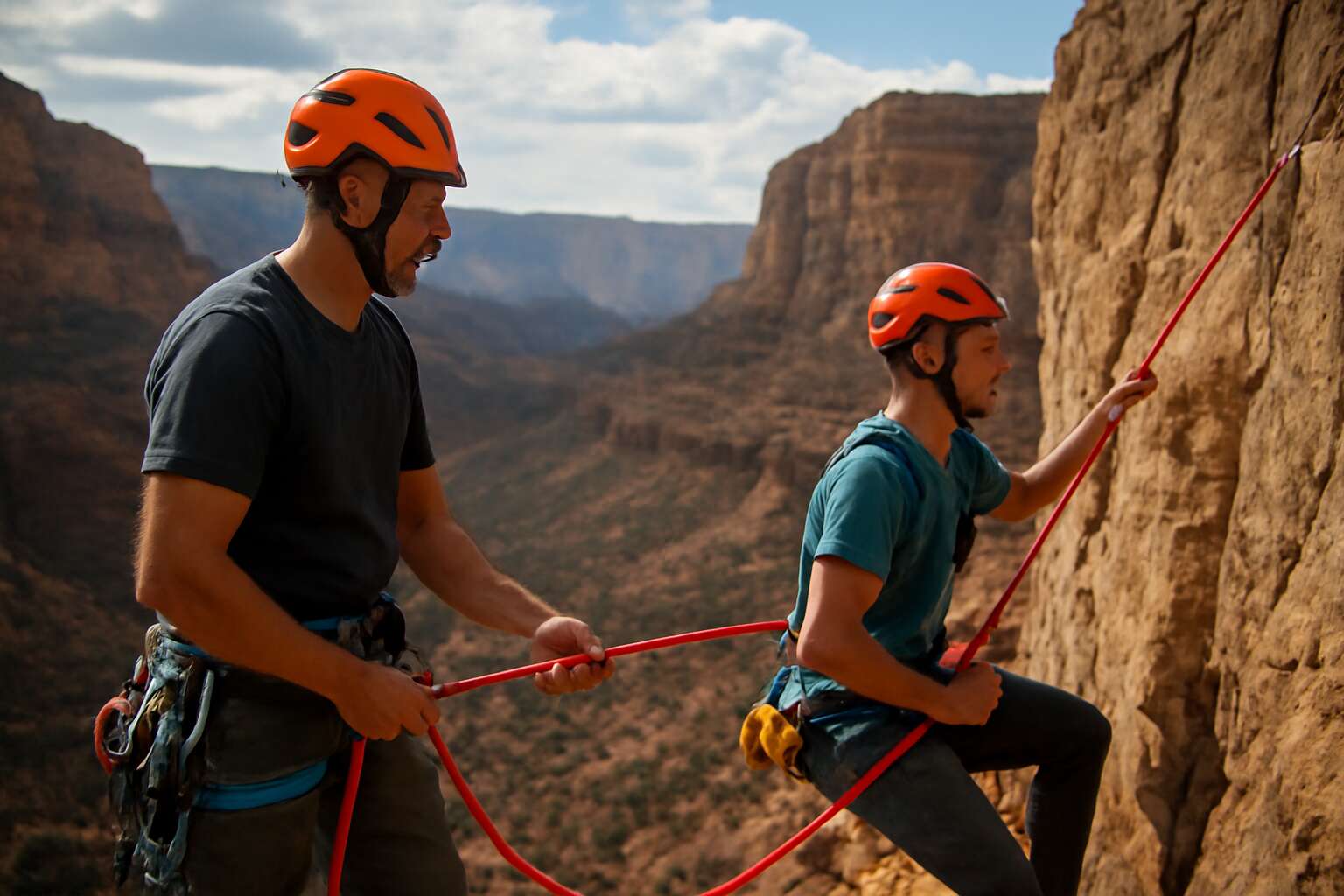
Understanding the Role of a Technical Abseiling Guide
Key Responsibilities for Beginners and Group Sessions
Thrill fades, technique endures. “Calm hands, clear commands,” as one veteran guide likes to say, and the truth lands: a solid briefing turns fear into focus. The abseiling instructor stands between spectacle and safety, guardian of the technical craft that translates rope, knots and weather into a trustworthy descent for beginners. In South Africa, where granite walls and sea cliffs demand respect, the role blends culture with cord and carabiner.
For beginners, the core duties fall into four beats:
- Pre-flight checks: harness, helmet, and anchor integrity
- Live demonstration of stance, braking, and rope management
- Guided practice with steady feedback and safety cues
- Responsible supervision that invites questions and curiosity
Group sessions require choreography: the guide coordinates pacing so participants aren’t rushing the line, reads the room’s energy, and keeps communication crisp yet courteous. I’ve seen this balance turn daunting descents into collaborative theatre for all involved.
Safety Leadership and Real-Time Risk Assessment
Across South Africa’s granite faces and sea cliffs, the abseiling instructor threads risk with rhythm and respect. A crisp briefing can turn nerves into focus and transform a tense moment into a measured descent.
Safety leadership hinges on real-time risk assessment: reading shifting winds at a ledge, confirming anchor redundancy, and translating weather, rope wear, and fatigue into decisive commands.
- Site integrity checks and anchor redundancy
- Real-time risk scoring with adaptive commands
- Clear cues for pauses, holds and descents
Choreography becomes a quiet conversation between climber and guide, where energy is read, pace is tuned, and communication remains crisp yet courteous—turning daunting descents into confident, shared moments of ascent.
Education, Credentials, and Career Development
More than half of adventure seekers in South Africa say safety credentials influence their choice, and the decision to hire an abseiling instructor hinges on more than bravado. A guide becomes a storyteller of risk, turning sheer granite into a measured dance of focus and trust.
Education and credentials form the backbone of a professional path. Beyond strength and nerve, a technical guide studies knot theory, anchor redundancy, weather interpretation, and rescue basics to keep clients calm and connected to elevation.
- Accredited training programs and climbing associations
- First aid and emergency response certifications
- Rope systems, anchor construction, and rescue techniques
Career development in SA blends ongoing mentorship, client diversity, and opportunities to lead in varied environments—from sandstone canyons to ocean cliffs. The journey is continuous, and mastery arrives as experience, humility, and formal recognition entwine.
Delivering Exceptional Client Experience and Retention
Across South Africa’s diverse cliffs, a calm voice and precise hands define every descent. An abseiling instructor isn’t just a climber; they’re a navigator of fear and flow!
Delivering exceptional client experience means more than guiding ropes. It’s about clear intent, steady cadence, and making the client feel seen at height. The guide reads weather quirks, sets the pace, and turns risk into rhythm so clients leave with confidence rather than nerves.
- Pre-briefing that aligns goals with terrain
- On-route communication that stays calm under pressure
- Real-time risk checks and seamless rescue readiness
- Post-session debrief to anchor learning and retention
Skills and Qualifications Needed to Teach Abseiling
Technical Proficiency in Rope Handling and Belay Techniques
Across South Africa’s rugged playgrounds, the descent is a dialogue between mind and rope. “Every descent is a story you tell yourself about control,” a seasoned abseiling instructor often says, and that truth lands with each measured breath.
To teach this art, you need technical proficiency in rope handling and belay techniques that you can demonstrate under pressure.
- Rope systems setup and anchor integrity
- Belay device operation and backup safety
- Knots, rope management, and communication cues
- Emergency response and problem-solving under stress
Beyond raw skill, credibility stems from ongoing education, certifications, and a commitment to coaching every participant with patience.
These foundations ensure the abseiling instructor can guide groups through South Africa’s varied terrains with confidence and care.
First Aid, Emergency Response, and Safety Protocols
In South Africa’s shadowed gorges, a single misstep costs more than a breath. A true abseiling instructor knows that readiness begins before the rope leaves the rack. “First you learn to listen to the rope,” the whispered maxim goes, guiding every measured movement.
To teach safely, this role must carry more than nerve. Core qualifications anchor performance:
- First Aid certification (Wilderness or Advanced Lifesaving) and CPR
- Emergency response and rescue skills (self-rescue and partner rescue)
- Rigging, anchor inspection, and equipment maintenance proficiency
- Formal safety protocols, risk assessment, and incident reporting
Continuous education, scenario-based training, and renewed credentials ensure credibility on every cliffside. In SA’s varied terrains, mentorship and vigilance fuse, turning nerves into confident, controlled descents as an abseiling instructor.
Professional Communication and Client Management
In the shadowed rifts of South Africa, the abseiling instructor threads fear into focus with quiet authority. Skills are earned through patient repetition and a gaze trained on consequence. A true mentor models measured breaths and precise commands, turning tremor into technique and risk into ritual safety.
- Client communication that sets clear expectations and keeps nerves steady
- Decision-making under pressure with concise, actionable commands
- Mentorship and coaching to build confident, independent climbers
- Precision in gear handling and ongoing personal development to sustain standards
These capabilities form the backbone of professional credibility on every cliff side, ensuring clients leave not just with a thrill but with a quiet, lasting mastery. Carrying that role means answering to a quiet promise: safety first, curiosity second.
Client-Centric Training Programs and Lesson Planning
Designing Safe Progressions and Training Drills
Here in South Africa’s craggy playgrounds, 92% of first-timers remember their first abseil as a turning point. As an abseiling instructor, I design client-centric training programs and lesson planning that honor each climber’s story.
Every course begins with a client profile, learning style, and terrain-specific goals. We pace the journey, weaving trust, technique, and feedback into a living plan.
- Goal-aligned progression that respects individual learning pace
- Terrain-aware scheduling that suits SA conditions
- Reflective debriefs that translate practice into confidence
Designing Safe Progressions and Training Drills means tailoring challenges to the moment. In South Africa’s environments—from granite crags to coastal drop-offs—you’ll see anchor choices, clear communication, weather awareness, and safe retreat plans woven into every session!
Adapting Lessons for Different Skill Levels
In South Africa’s playgrounds, 92% of first-timers recall their first abseil as a turning point. An abseiling instructor crafts client-centric training programs and lesson plans that honor every climber’s story. Each course begins with a learner profile, preferred pace, and terrain goals, then unfolds as a living map where trust guides every move!
Adapting lessons for different skill levels is a careful art. Layers of challenges are added to match the moment—neither rushed nor lingered—so each climber moves with intention, clarity, and growing confidence. The approach respects weather and terrain, turning each session into a continuation of the last.
- Tailored blocks that match pace and confidence
- Drills tuned to background, terrain, and weather windows
- In-session check-ins that shape the next practice block
The abseiling instructor mindset is to listen before cues, turning fear into curiosity and belays into small revelations.
Equipment Orientation and Safety Briefings
In South Africa, 92% of first-timers remember their first abseil as a turning point. As an abseiling instructor, I craft client-centric training programs that honour every climber’s story. Each session starts with a learner profile, a preferred pace, and a terrain goal, then blooms into a living map guided by trust.
Equipment orientation and safety briefings form the spine of every ascent. As an abseiling instructor, gear is translated into simple choices, fitting the climber’s rhythm and the terrain’s temperament. Safety becomes a relationship—between harness, rope, and breath—softly crystallizing confidence as the route reveals itself.
To keep the briefing crisp, a compact checklist underpins the session:
- Harness and helmet fit confirmed and comfortable
- Belay device, carabiners, and rope inspected with a practice test
- Footwork, stance, and clear signals rehearsed for the descent
The arc of the session becomes a calm, curious descent, where gear becomes a friend and fear folds into wonder through patient guidance.
Assessment Strategies and Feedback Mechanisms
92% of first-timers remember their first abseil as a turning point. This moment becomes the compass for the abseiling instructor shaping client-centric training programs that honour every climber’s story.
Lesson planning starts with a learner profile, a preferred pace, and a terrain goal, then blooms into a living map of progress guided by trust. Assessment strategies track small wins and adapt to feedback.
- Formative skill demonstrations with immediate feedback
- Descent pace, breathing, and footing checks
- Post-session reflection and defined next-step goals
Feedback mechanisms are two-way: climbers describe what helped them most, while the instructor notes patterns to inform future drills.
Session Documentation and Progress Tracking
92% of first-timers remember their first abseil as a turning point, and the best instructors translate that moment into a living plan. As an abseiling instructor, I craft client-centric training that honours a climber’s story from profile to terrain goal. Lessons bloom into a map of progress shaped by trust, where pace and curiosity guide every step.
- Session goals aligned with the learner profile
- Progress milestones visible on a shared board
- Post-session reflections guiding next steps
Lesson planning session documentation and progress tracking become the spine of practice: goals translate into micro-steps, notes reveal patterns, and the journey is recorded on a living map that climbers and instructors read together. The result is clarity and momentum on South Africa’s rugged routes.
Safety, Gear, and Compliance in Abseiling Training
Gear Inspection, PPE, and Maintenance
One near-miss can be traced to gear—safety hinges on routine checks and clear roles. As an abseiling instructor, I stress that gear inspection precedes every session. PPE fits correctly, harnesses are kept snug, helmets sit level, and gloves protect grip. Compliance means following local standards and maintaining clear documentation.
- Harness and rope condition
- Carabiners and belay devices status
- Helmet and PPE integrity
- Maintenance logs and cadence
Maintenance is a culture, not a task. An instructor in South Africa keeps this alive by enforcing a two-step check before exit and a quarterly gear audit. This is how clients stay safe and return for more, year after year.
Site Risk Assessment and Weather Considerations
One in four abseiling sessions hinges on a weather window that can close in minutes, a reminder that safety is a living discipline, not a ritual of checks. Site risk assessment and weather considerations shape every descent, guiding me to read light, wind, and terrain as partners rather than adversaries. Even gear readiness—harnesses, ropes, anchors—must align with current conditions. As an abseiling instructor, I treat this work as a moral contract with clients and the landscape alike.
- Site risk assessment alignment with local terrain and rock conditions
- Weather monitoring and threshold criteria for proceeding or pausing
- Clear communication protocols and emergency escalation plans
Compliance means keeping meticulous records, respecting local standards in South Africa, and adapting plans on the fly. The result is trust, crisp execution, and a pace that honors both the mountain and the moment.
Regulatory Standards, Insurance, and Liability
A brisk truth anchors every descent: a weather window can vanish in minutes, and risk doesn’t wait. For the abseiling instructor, safety and accountability fuse into a living code—rooted in South Africa’s Occupational Health and Safety Act and local standards, watched over by insurers and guiding bodies. Compliance becomes a moral covenant with clients and the landscape alike.
- Occupational Health and Safety Act and local safety regulations
- Insurance coverage and liability terms for operators and instructors
- Incident reporting, record-keeping, and regulatory audits
Gear and PPE sit at the intersection of trust and regulation; when the equipment tells the truth about maintenance, clients feel safer and the legal expectations are met. In this way, the role embodies professional integrity under South Africa’s watchful standards.
Certification Pathways and Continuing Education
Safety is a habit that outlasts a bad day, and in abseiling training it wears the crown of responsibility. ‘Safety is a culture, not a checklist,’ a mentor quipped, and that line travels with the abseiling instructor.
Gear and compliance shine in gear racks and briefing boards. Clients feel safer when PPE and rope gear look cared for. For Certification Pathways and Continuing Education, anchor points include:
- Structured advancement milestones in rope handling and systems
- Regular refresher courses on safety protocols
- Hands-on inspections and gear maintenance workshops
Staying current means navigating audits with grace. In South Africa, ongoing education, incident reporting, and record-keeping shape a resilient profession.

0 Comments