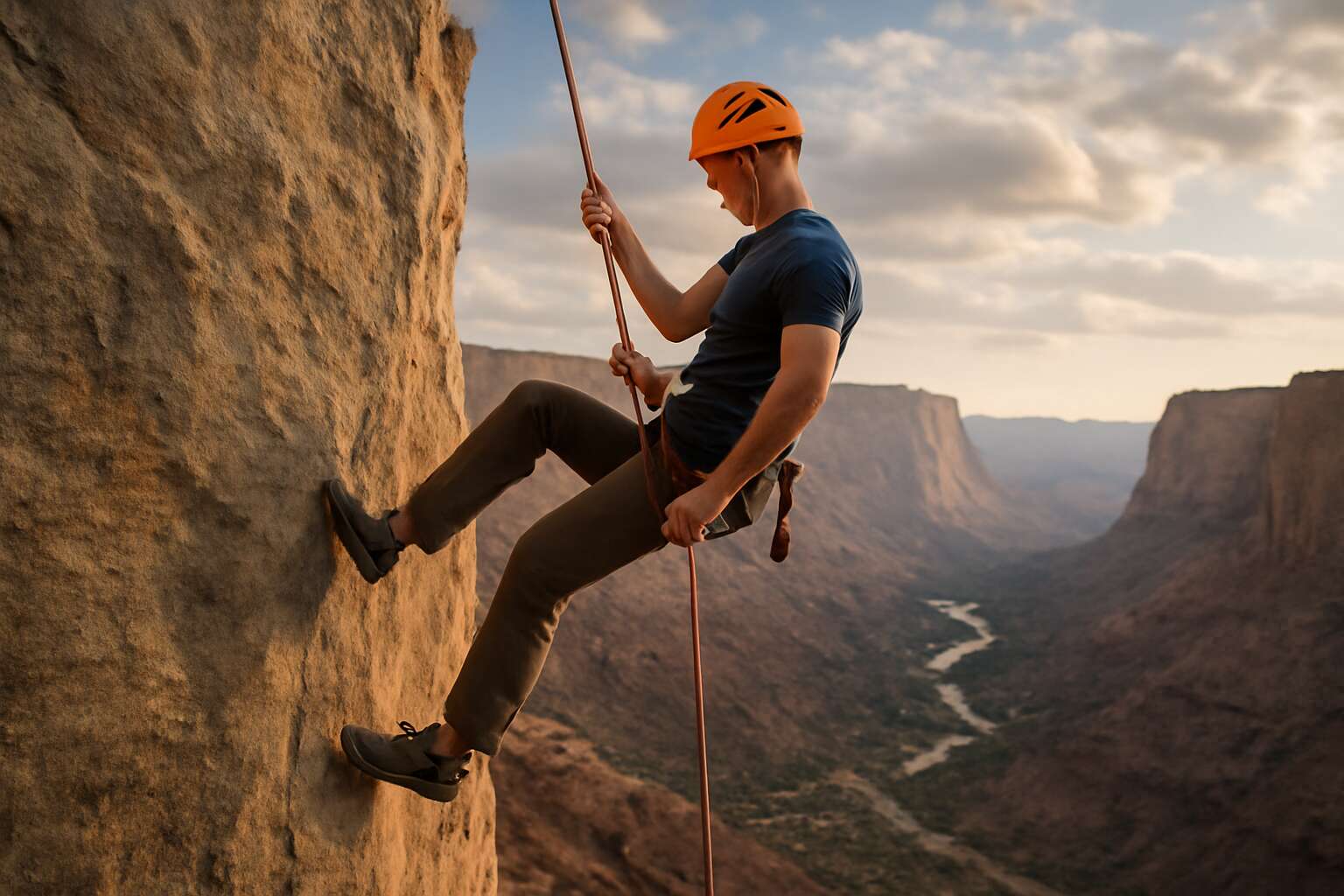
Line Selection and Fundamentals
Understanding Descent Lines: Purpose and Uses
Bold descents begin before you step over the lip. In South Africa’s granite playgrounds, the choice of rappelling line can decide whether the moment becomes triumph or tremor. “Your lifeline is the line you choose,” a seasoned guide reminds me, and the truth lands like a hook in rock.
Fundamentals of a descent line revolve around control, weight and purpose. A good line supports steady braking, predictable stretch, and clear reach to anchors. We speak of static reliability and the subtle differences that keep a line true under sun, rain, or rope burn—crucial when navigating South Africa’s rugged escarpments and coastal cliffs.
Consider these line-selection touchstones:
- Line diameter and weight rating match your load
- Material integrity and sheath wear
- Length relative to anchors
Understanding these fundamentals helps shape confident descents, where the line you’ve chosen becomes the quiet backbone of every controlled ascent and peaceful landing.
Key features to evaluate: strength, diameter, and stretch
In South Africa’s granite playgrounds, every descent begins with trust in the line you choose. A seasoned guide says, “Your lifeline is the line you select”—and that truth lands on rock like a practiced strike. When the rappelling line sings true, confidence follows the rope and the day unfolds with quiet purpose.
Key features to evaluate include three steady touchstones:
- Strength — the line’s ability to carry load and resist abrasion over rugged granite
- Diameter — how thick the rope feels in your grip, and its effect on braking and anchor compatibility
- Stretch — the elongation under load, shaping control during the descent
With balance of these factors, the choice supports a controlled, respectful movement along South Africa’s cliffs—where the line remains the quiet backbone of each descent.
Common materials explained: nylon, polyester, HMPE
In South Africa’s granite playgrounds, one choice can tilt a descent from doubt to poise. A seasoned guide says, “Your lifeline is the line you select,” and that truth lands on rock with quiet certainty. When the rappelling line sings true, the day follows.
Common materials give the rope its character. Nylon offers durability with light stretch; polyester resists sun and grit; HMPE delivers exceptional strength for a thin profile.
- Nylon: strong, abrasion resistant, moderate stretch
- Polyester: low stretch, UV stable, easy handling
- HMPE: high strength-to-weight, minimal creep
Together, these materials shape how a rappelling line behaves under load and how it feels in your grip on South Africa’s cliffs.
The craft lies in knowing these traits, letting the line quietly bear the descent.
Line ratings and safety standards: what to look for
South Africa’s granite playgrounds demand more than grit; they demand trust in a lifeline. “Your lifeline is the line you select,” a seasoned guide says, and that truth lands on rock with quiet certainty. When the rappelling line sings true, the descent becomes a meditation.
Line ratings and safety standards are not abstractions but essential guardrails. Look for clear labeling, tested breaking strength, and certifications that trace to reputable bodies. These markers translate risk into clarity when you’re facing overhangs and weather.
- Certified by recognized bodies
- Clear breaking strength and labeling
- Appropriate dynamic vs static classification
- Diameter and sheath construction
- Age, wear, and evidence of inspection
Treat each factor as a moral choice as much as a mechanical one. The line you choose is a statement about how you face gravity, how you respect the rock, and how you feel when the rope takes your weight.
Safety Protocols and Best Practices
Pre-use inspection checklist
Rappelling line doesn’t beg for attention until it does—then it demands it, loud and clear. A hard truth: most descent incidents trace back to skipped pre-use checks rather than bad weather. In South Africa’s rugged outings, treating safety as a ritual isn’t optional; it’s the only way down.
Safety protocols and best practices start before you clip in. Here’s a concise pre-use mindset that keeps you grounded instead of rock-falling into drama.
- Inspect the rope for frays, cuts, or heat damage.
- Ensure harness, helmet, carabiners, and descender are intact and secured.
- Assess anchors for solidity and redundancy; check for abrasion.
- Confirm gear labeling and establish clear communication with your partner.
Respect the rappelling line and keep preparation second nature; the descent stays purposeful, not perilous.
Anchors, redundancy, and belay integration
In South Africa’s wind-sculpted limestone and granite, the anchors of a descent are not mere hardware but a covenant. “Safety is a discipline,” whispered among climbers as the rappelling line carries the burden and blessing of every controlled drop—respected, steady, and never rushed. When redundancy and belay integration mingle in a canyon breeze, the journey down becomes a ceremony rather than a gamble, a myth made practical by discipline.
- Anchors with solidity and redundancy underpin the route.
- Belay integration relies on clear partner communication.
- Gear labeling and load paths are harmonized and traceable.
Safety folklore aside, the narrative remains grounded: the line thrives where anchors, redundancy, and belay synergy coexist in quiet, purposeful balance.
Knotting and backup systems
In the wind-sculpted canyons of South Africa, a single knot can determine a day’s fate. Safety is a discipline, not a box to tick.
Safety protocols and best practices hinge on knotting and backup systems that create a safety net when the primary line runs into trouble. Clear partner communication, visible redundancy, and disciplined gear inspection are not nostalgic luxuries but practical necessities in every rappelling line.
- Redundant line systems and backup knots
- Clear, unambiguous partner dialogue
- Regular gear compatibility checks and labeling
With the rappelling line as the shared responsibility, the descent remains a controlled ceremony rather than a gamble.
Environmental and weather considerations
South Africa’s wind-sculpted gorges don’t wait for your plan to align. The wind is a mercurial partner, and weather shifts can rewrite a descent in moments. In this harsh elegance, safety rests on reading the sky, reading the rock, and treating every rappelling line as a living system.
Environmental and weather considerations shape every move. Here are dimensions that temper bravado:
- Wind velocity and gusts that tug at anchors and harnesses
- Temperature swings that affect rope stiffness and comfort
- Moisture, dew, and rock slickness that alter friction
- Storm potential and flash flood risk in canyon routes
- Lightning risk when traversing exposed terraces
With this awareness, the descent becomes a shared ritual rather than a gamble. A calm, attentive mindset—paired with disciplined gear handling and partner dialogue—keeps the rappelling line central to safety in South Africa’s dramatic environments where weather can rewrite the day in minutes.
Emergency procedures and self-rescue
South Africa’s chasms demand more than grit; they demand respect for the rappelling line. In canyon winds, a single misread gust can rewrite a descent in moments. Safety protocols become a covenant: calm, clear communication, and a ritual of checks that keeps the line at the center of every move.
- Clear, concise communication and pre-agreed signals between partners
- Redundant anchors and disciplined belay integration to prevent surprises
- Situational awareness and pause when doubt arises
- Training and rehearsals for self-rescue concepts and emergency procedures
Readiness goes beyond gear; it rests in training the eye, voice, and reflex. When the unexpected arrives, the rappelling line becomes a lifeline—swift, deliberate action, and a practiced plan guiding the way home.
Material Choices and Specifications for Descent Lines
Material types explained: nylon, Dyneema, and blends
Every controlled descent hinges on trust in the line beneath you. Material choice for a rappelling line is less about flash and more about the quiet work of heat, abrasion, and stretch. A veteran climber once quipped that “quality is the quiet partner of every ascent”—and you’ll feel that partnership when the line behaves under load and light.
Here are the primary players in nylon, Dyneema, and blends:
- Nylon: affordable, good abrasion resistance, and forgiving stretch for comfortable handling.
- Dyneema: exceptional strength-to-diameter, low elongation, and a lighter profile for sleek ascents—though pricier.
- Blends: tailored traits that balance durability, weight, and stretch for varied conditions.
Different terrains in South Africa favor different traits. Nylon offers practicality and ease, Dyneema delivers high strength with minimal bulk, and blends provide a balanced compromise. With the right rappelling line, the descent becomes a story well told rather than a struggle.
Diameter, weight, and handling characteristics
Diameter, weight, and handling decide the story your descent tells. The rappelling line works through heat, abrasion, and stretch more than flash. A well-chosen line is the quiet partner in every descent—you’ll feel it when it holds steady under load and lets you move with control through South African terrain.
- Nylon: larger diameters for comparable strength, forgiving stretch, good abrasion resistance, affordable.
- Dyneema: excellent strength-to-diameter, low elongation, lighter profile, pricier.
- Blends: tailored traits balancing durability, weight, and stretch for varied conditions.
In South Africa, terrain dictates the mix of stiffness, drag, and anchor compatibility.
Tensile strength, dynamic vs static behavior
In the quiet calculus of descent, a rappelling line is more than a tether—it is a partner that speaks in stiffness and give. Across South Africa’s sun-worn gorges, its character reveals itself as a steady anchor you feel under load and a guide that keeps motion controlled.
Tensile strength is the headline—it tells you how much stress the line can bear before deforming. Dynamic behavior matters when energy is exchanged during a bounce or long rappel; static behavior favors uniform length with minimal stretch. The right combination lets the line flex with effort and still return to form after each descent, a subtle drama you notice in the palms of your hands.
- Nylon-based options: more elongation, forgiving energy absorption, abrasion resistance, and affordability.
- Dyneema-based options: high strength-to-diameter, very low elongation, lighter profile, pricier.
- Blends: tailored trade-offs balancing durability, weight, and stretch for varied conditions.
Standards and certification: UIAA, CE, EN
Across SA’s sunlit gorges, the rappelling line hums with quiet authority, and a veteran guide whispers, “The line is the cliff’s breath—move with it.” Standards become sensation here: the ropework speaks, and your descent keeps time with the rock.
- UIAA certification for tested performance
- CE marking for European compliance
- EN standards specifying strength and dynamism
Certification matters in the quiet calculus of descent. Look for UIAA, CE, and EN marks; they signal tested performance under load, controlled elongation, and clear labeling for traceability. A rappelling line bearing these stamps promises consistency under load.
Maintenance, Care, and Lifecycle
Cleaning, drying, and storage after use
Ropes remember what they endure. “Protection begins where the line rests,” a veteran guide says, and on South Africa’s sun-burnished crags that wisdom lands hard. The care given to a rappelling line is the quiet warranty for the climb ahead.
- Moisture control: avoiding dampness to preserve elasticity
- Light and chemicals: minimize UV exposure and solvents that weaken fibers
- Storage environment: a cool, ventilated space away from heat supports longevity
Care centers on cleanliness, dryness, and storage after use. The following principles guide longevity rather than risky shortcuts:
Lifecycle wisdom recognizes wear as a tutor. Regular, thoughtful maintenance keeps the line honest and ready for the next challenge, even as terrain and weather test its memory.
Inspecting for wear: fraying, glazing, flat spots
South Africa’s cliff-edge classrooms remind us that reliability is memory kept between strands. A rappelling line earns its trust through quiet, patient care. Even a single neglected moment can betray the ascent, a stark reminder that up to 27% of line failures trace to post-climb neglect. Maintenance, care, and lifecycle are the quiet rituals that keep the rappelling line honest and ready for the next descent.
Care is a disciplined poetry: moisture’s mischief, ultraviolet’s slow toll, and solvents’ whispering erosion. The aim is balance—preserving elasticity while safeguarding strength—so the line remains responsive when the terrain tests memory and mettle alike.
The lifecycle mindset turns wear into wisdom; the line remembers routes, weather, and weight. Retirement becomes a considered renewal, not an end. Treat each reuse as a dialogue with memory, and let the rope carry forward the story of the climb.
Inspecting for wear is the ritual that keeps that story honest: fraying, glazing, and flat spots can reveal fatigue before failure.
- Fraying or fuzzing along the sheath
- Glazing that dulls surface texture
- Flat spots indicating core compression
Repair options and when to retire a line
Maintenance, care, and lifecycle are the quiet rituals that keep the rappelling line honest. In SA sun and shale alike, a line earns trust through patience rather than bravado. Retirement isn’t melodrama; it’s a courteous nod to the next ascent—the moment memory agrees to part with the rope that served it well.
- Core repair and manufacturer-approved splices
- Sheath protection and patching where approved
- Lifecycle planning and retirement criteria when performance margins fade
Every reuse should feel like a seasoned conversation with memory; let the line carry forward the climber’s stories while leaving room for new routes.
Replacement schedules and record keeping
Care is the conscience of the rope. In field notes from our SA routes, climbers report that well-kept lines stay true for longer than bravado or weathered souls—memory lingering like chalk dust after a hard ascent. The cadence of maintenance, care, and lifecycle planning shapes the rappelling line’s performance more reliably than flashy bravura.
Maintenance, care, and lifecycle replacement schedules form a ritual ledger. Treat the rope as living equipment—drying, storage, and gentle handling when not in use safeguard its character. One passes down a reputation through a single, patient decision to retire when margins fade.
- Date and session identifiers
- Environmental conditions at use
- Repair actions and outcomes
Record keeping translates practice into lineage—each entry a verse in the rope’s saga. A properties notebook, a digital log, consistent signatures between climber and rope: this is how a line earns its second life with faith in tomorrow’s routes.
Field Use Scenarios and Tips
Rappelling on natural rock vs artificial routes
Cliff dexterity isn’t luck; it’s discipline. ‘The line is the last word you hear before a safe descent,’ a guide once told me, and South Africa’s rugged playgrounds prove it. Field use demands versatility for rappelling line—from granite overhangs to man-made hauls in training sites.
- Natural rock: anticipate variable holds, lichen, and weathered edges
- Artificial routes: consistent friction and cleaner anchors help refine technique
- Canyons and gorges: plan for sand, grit, and wind exposure
- Equipment care: inspect anchors and line after each session
When tackling natural rock, keep a low profile and test holds with a subtle tug before committing. For artificial routes, leverage predictable friction and standardized anchors to rehearse moves safely and build confidence in the rappelling line.
Weather impact: wet surfaces and low visibility
South Africa’s cliff lines demand respect; a sudden squall can turn a dry ascent into a cautious retreat. Field use reveals how weather shifts redraw plans, grip, and the rhythm of the rappelling line. It stays true: when light slips, the line speaks first and softly guides the descent.
On natural rock, moisture, lichen, and wind reshape holds and rope feel. In canyons and on sandstone, low visibility from mist or dust means deliberate pacing and extended test-tugs before committing.
Practical reminders for field use:
- The rappelling line responds to moisture with altered friction
- Weather updates and wind shifts influence visibility and rhythm
- Holds are approached with deliberate caution
- Rope path interacts with spray and drift in mist
Rescue scenarios and emergency procedures
“The line speaks first.” In the field, a gust can turn a steady rappel into a cautious retreat. South Africa’s cliff lines demand respect; dew, mist, and wind redraw holds and rope feel. The rappelling line becomes a weathered guide, hinting at the rock before you descend.
In field use, nimble judgment matters as terrain shifts. Here are practical checks to keep you safe on the line in SA canyons and cliffs:
- Assess moisture and spray to predict friction on the rope.
- Maintain clear two-way communication and hand signals with your partner.
- Have a pre-planned rescue and redundancy strategy ready.
Rescue scenarios and emergency procedures require calm, practiced responses. When problems arise, teams lean on clear communication, backup systems, and established protocols. Recalling your training keeps the line as a steady reference point while help is on the way.
Gear integration: harness, carabiners, and anchors
South Africa’s canyon descents bite back with gusts and spray; a confident rappel can turn into a cautious retreat in moments. The rappelling line feels like a weathered guide, hinting at rock and path as you descend.
In field use, gear integration matters. A snug harness, locked carabiners, and anchors set for redundancy keep the move smooth and safe.
- Harness fit and comfort to prevent chafe
- Carabiner orientation and locking status
- Anchors arranged for redundancy and equalized loads
Rappelling line awareness remains constant: communicate clearly with your partner and anticipate shifts in the wind, dew, or spray that alter rope handling.
Practice and training drills
Field use unfolds like a shared story etched into the rock. In South Africa’s rugged canyons and coastal gorges, teams move with the rhythm of wind and water, and the rappelling line stays as a constant companion. Field use scenarios demand a calm mind, situational awareness, and a partner who can read the rope as if it were a pulse map. The line becomes a thread weaving safety and speed through sun-burnished stone.
- Clear verbal cues and timing between partners
- Consistent rope flow and mindful body positions to minimize chafe
- Environmental awareness drills that simulate realistic wind and spray conditions
In practice and training drills, teams focus on rhythm, communication, and mutual monitoring, turning field use into a choreography that feels almost effortless even when the terrain tests you.



0 Comments